Live Clay
Ceramics & Custom Urns by Laura Bruzzese
Today, a poem
It rained last night, finally. This morning is overcast and boggy and dripping, a good day for a poem. This is one of Laura Gilpin’s best-known poems from her first book, The Hocus Pocus of the Universe (1976). Laura Crafton Gilpin* (1950-2007) was a poet, nurse, and passionate advocate for patients rights. (*Not to be confused with Laura Gilpin the American landscape photographer who was well-known for her images of Native Americans, particularly Pueblo and Navajo. She died in Santa Fe in 1979.) According to her NY Times obituary, “Laura’s indomitable spirit, her kindness, her droll humor, her brilliant intellect and her love of celebrations are legendary.” Sounds like someone I’d like to know, maybe I’ll look for a biography. In the meantime, here is “The Two Headed Calf” which always makes me cry, for some reason:
The Two-Headed Calf
Tomorrow when the farm boys find this
freak of nature, they will wrap his body
in newspaper and carry him to the museum.
But tonight he is alive and in the north
field with his mother. It is a perfect
summer evening: the moon rising over
the orchard, the wind in the grass. And
as he stares into the sky, there are
twice as many stars as usual.
Istanbul & Cappadoccia (plus my new Turkish rug)

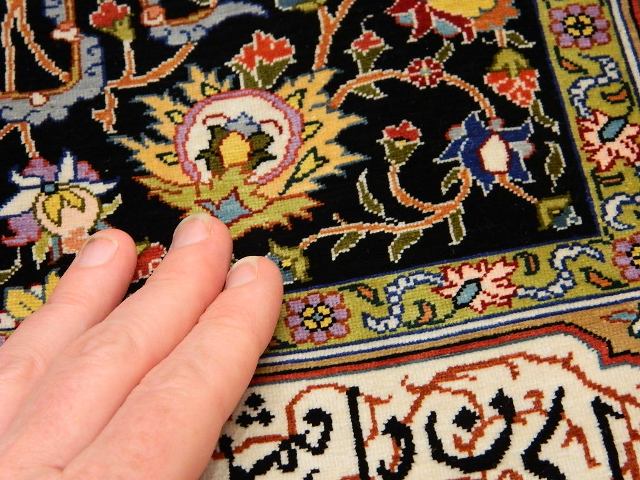
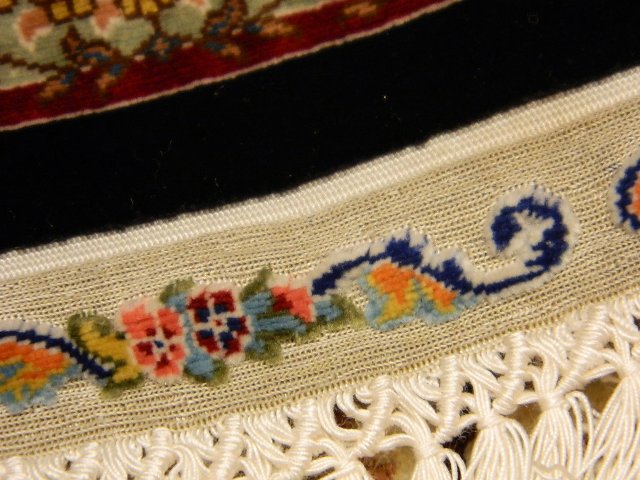
 For everyone who is just dying to know what my new Turkish rug looks like, here’s a few pictures. It arrived last week and fits nicely in my hallway. I think the pictures (click to enlarge) show the raised tuft vs. flat embroidered areas; it really does feel special on the feet, contoured and woolly. Thanks to all who have helped with this new bit of Turkish luxury in our home (you know who you are). Beautiful, no? I’ve thus far resisted the urge to wrap myself in its hand-spun textile goodness and loll by the pond like a sultan, waiting for someone to pick apricots off the tree and feed them to me, but only because it’s been so hot.
This is my last Turkey post, with one final group of pictures from two of my favorite places, Istanbul and Cappadocia. It was hard to limit my choices to just a few, so I’ll post some of the most visually stunning places, starting with a few images of The Blue Mosque. I’ll add a bit of descriptive/historical info, but I’m relying on my own rogue memory so it may or may not be factually sound.


Next, is Hagia Sophia (Holy Wisdom), one of the largest domed structures in the world. It has served many different purposes since it was originally built in 360, including Orthodox patriarchal basilica, Greek Patriarchal cathedral, Roman Catholic cathedral, and mosque. It was secularized in 1931 and opened as a museum in 1935. It’s built upon several natural wells, which distributes the weight evenly and has helped it survive many earthquakes over the centuries.


Next is Topkapi Palace which was the official and primary residence of the Ottoman Sultans for around 400 years (1465-1856) of their 624-year reign. It’s a complex of many different buildings, including three of my favorites, the Imperial Treasury, the Divan Council, and the Circumcision Room. I read about a Celadon and Porcelain collection and Miniature and Portrait Gallery, but we didn’t get to see those. 
Inside the Treasury are gifts given to the Sultans over the years, many with jewels, precious stones, gems, and fine inlay. There’s also an 86 carat diamond that was originally found in an ancient trash heap and sold for a spoon. Here are a few pictures of the Divan Council and the Circumcision Room, covered wall-to-wall with hand-painted tiles.


Last but not least, Cappadocia, located in eastern Anatolia near the center of Turkey, and known for its sandstone fairy chimney formations and rock dwellings. It is mentioned in writing as far back at the 6th c. BC. This area has such an interesting history–far too much to go into here, but worth reading about in the tour books.

The area is lousy with underground networks of tunnels and rooms that were carved into tufa (a type of rock consisting of consolidated volcanic ash) many centuries ago, once thought to house up to 30,000 people at a time, including early Christians hiding from persecution. The underground cities had everything an above-ground city would have: residences, cooking areas, garbage dumps, wine making facilities, water storage, etc.


Gigantic round stones like these were used to block off entrance tunnels from invaders. Once the stones were rolled into place from the inside, they could only be moved from the outside by breaking them. Pretty clever.

Tufa has three amazing properties that made it particularly well-suited for dwellings. It’s soft and malleable until it mixes with oxygen, and then it becomes strong and rigid; it absorbs 60% of carbon from fires, allowing indoor cooking; and it maintains a constant year-round temperature of around 48 deg, mas o menos. The dwelling we visited was 11 stories deep but only 8 had been excavated, and only 4 were open to the public.
Also spectacular in this region are the stone cathedrals, occupied by the Orthodox Green Christians until 1924, when the Greeks were strongly encouraged to return to their homeland, as the Turks living in Greece were, during the Greek-Turk exchange. There are thought to be more than 300 churches and monasteries in the region and only a few are currently open to tourism.


Unfortunately, the area only became a national park about 60 years ago, prior to which (1924-1950’s) anyone could go there and do anything. Consequently, many of the frescos inside have been defaced (literally, with eyes and mouths gouged out) or damaged. But still incredible to see, like so much of Turkey.

Farewell, Turkey: People
This will be the last post about Turkey (split in two). I’ve given up on trying not to bore you with excessive images because there are just too many beautiful things I want to share.
Here are some of the people who made an impression on me during the 12 days I spent in Turkey, visually or otherwise. I’ve added a bit of commentary where appropriate.
Woman at the Sufi Dervish center in Istanbul. (I didn’t attend the whirling Dervish ceremony that began around 11 p.m., but those who did said it was spectacular. I wish I’d gone!)

The art of entrepreneurship starts at a young age.

This is one of our delegation leaders, Neçip, and his wife, Rabia. We had an interesting discussion about a woman’s choice to wear a head scarf according to her interpretation of Islamic practice. Rabia didn’t start wearing a head scarf until she was in her 20s (much to the surprise and bewilderment of her family), after doing her own research.

On Sunday, we saw many brides in Istanbul. The Muslim tradition is to pray at the Mosque, then rest at a restaurant like this, and then proceed to the ceremony and party afterwards.


This couple was celebrating their engagement.

This little boy was crying on his circumcision day. One of the Turkish traditions (not religious) is for boys to dress up in these ‘king suits’ (for lack of knowing the real name), celebrate with family and friends at a party first, then go with family only back home, where a doctor administers a pain-killer and does the deed. No party afterword…


These are reporters and the chief editor (Markar Esayan, center) of the Todays Zaman. Freedom of expression continues to be a struggle for reporters in Turkey, who can be sued for libel or anything else for up to eight years after publication of a story. The man on the right has 137 open cases against him. The Daily Zaman is a liberal newspaper whose primary objective is accurate reporting. These men are dedicated to achieving full democracy in Turkey and a re-write of the existing constitution (written by military), hopefully after the upcoming election, to reflect equality for all people, regardless of gender, cultural, political or religious background. They have not received a salary since last November.


Turkish Delight: good enough for Len?
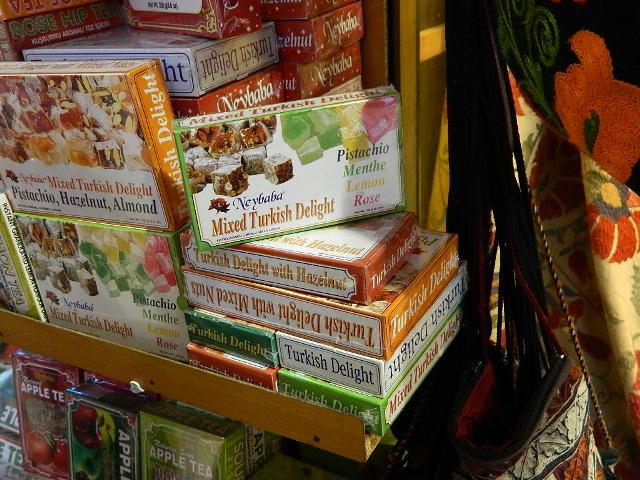 One day before I left for Turkey, I was talking to a friend at the gym about the trip and our conversation was overheard by Len Romano, who often eavesdrops. I tried to nonchalantly walk backwards before Len heard too much, but it was a negative. Not only did he find out about the trip, he
 asked demanded that I bring back at least 3 pounds of Turkish Delight (for him to feast on alone, though both of his adorable daughters love it). And not just any Delight… he insisted on the finest quality, hand-crafted,* organic, made with farm-fresh local ingredients, obviously expensive, Turkish Delight.
*Preferably by me, under the tutelage of a TD Master).
As you can imagine, this put a bit of a damper on the whole trip, as I often found myself feeling anxious about satisfying Len’s demands within the short 10-day span of our trip. Everywhere we went, I searched for Turkish Delight. But time and time again, it didn’t seem good enough, fresh enough, outstanding enough. I’ve purchased four boxes already (I’ll be leaving some of my clothes here to make room in my suitcase), hoping that one of them won’t be too disappointing.
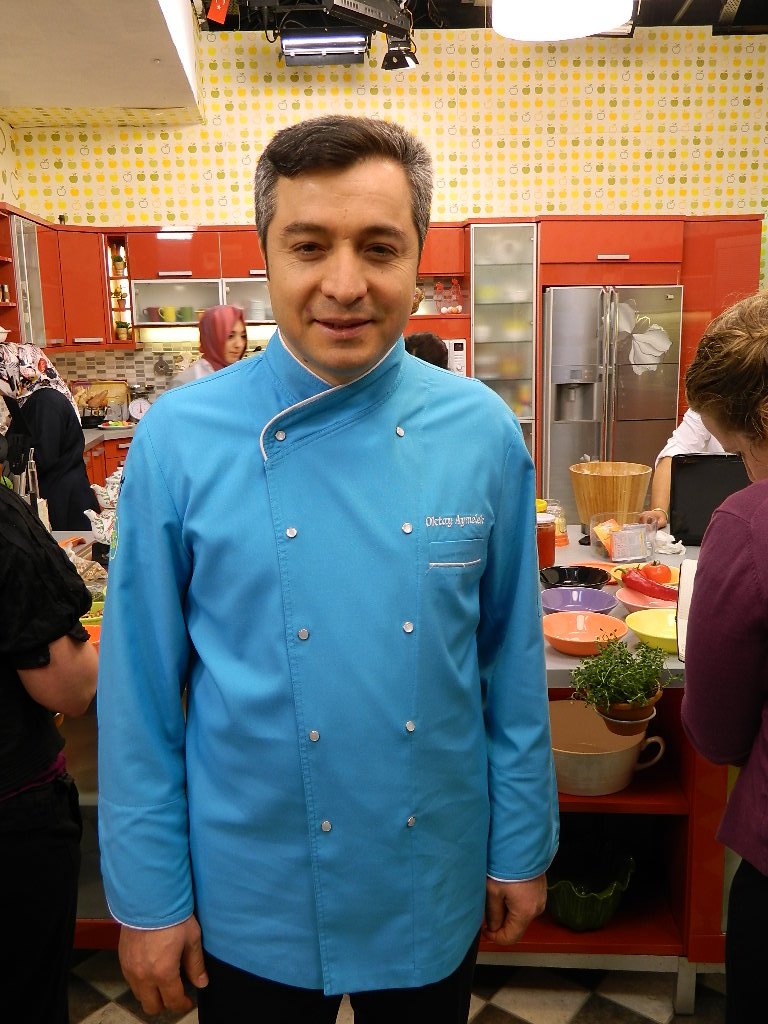
We visited a Turkish TV and radio station today (Samanyolu) and were lucky enough to meet Turkey’s most famous chef, Oktay Aymelek. He posed for pictures and showed us the herb garden that’s grown on set, with a tiny fish pond just below it. When it came time for Q & A, I asked if he could spend a few hours showing me how to make Turkish Delight for my friend (assuming all the ingredients were extra fresh), but he said no. 😦

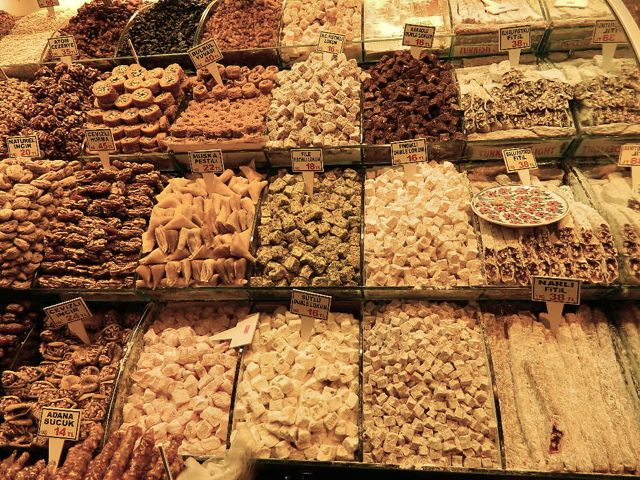
As you can see, the Grand Bazar was full of every imaginable thing, including the gooey, nut/fruit filled desert coveted by Len. But I had a hard time finding 100% organic + nuts that were grown, picked, roasted and shelled without the use of machinery.
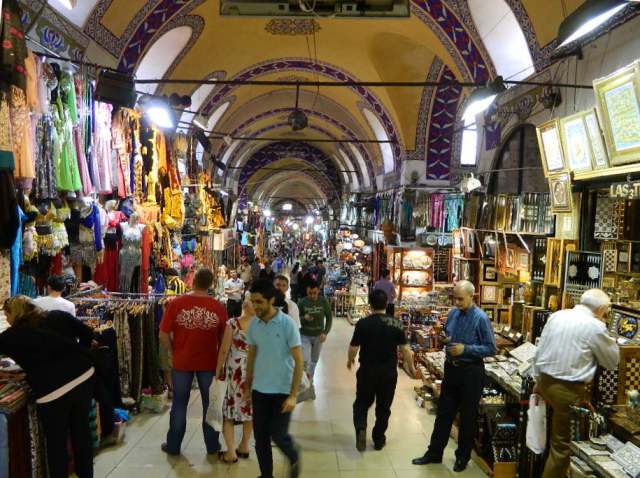
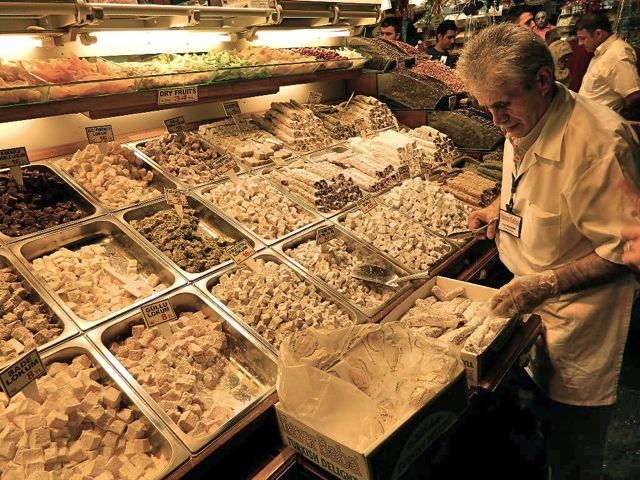
I searched everywhere and talked to everyone, powering through the formidable language barrier.
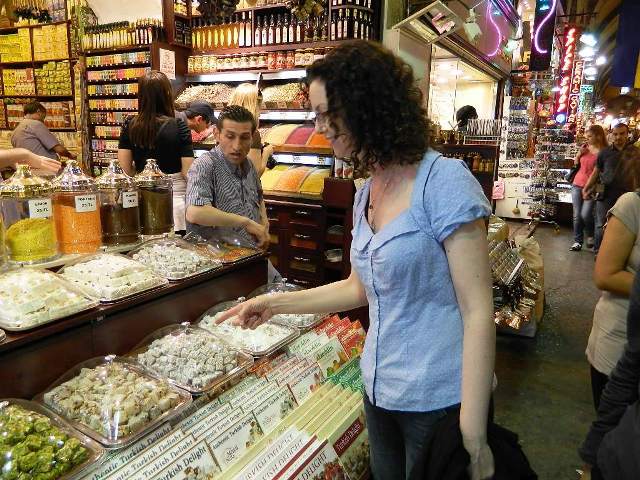 We leave tomorrow, which is sad enough, but I’ll also be getting up two hours early to try one last time to locate the home of the mother’s sister of the original inventor of Turkish Delight–info I obtained through a clandestine (and expensive!) connection via Resul, thanks to the happy coincidence that his ancestors were from the same Kurdish tribe as the connection’s. Only the best of the best for Len. Wish me luck!
Recovering from a Turkish Rug Purchase in Six Easy Steps
1. Find a bar, order a martini and hope it turns out like the Bird Island variety.(#3 Top Ten). Garnish with your own bitter tears. Enjoy.
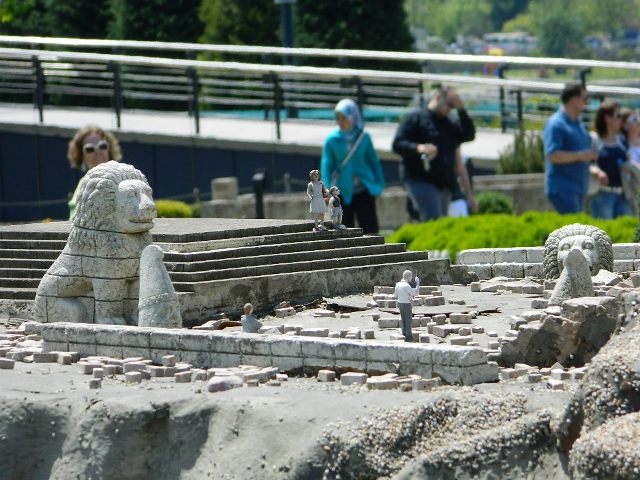
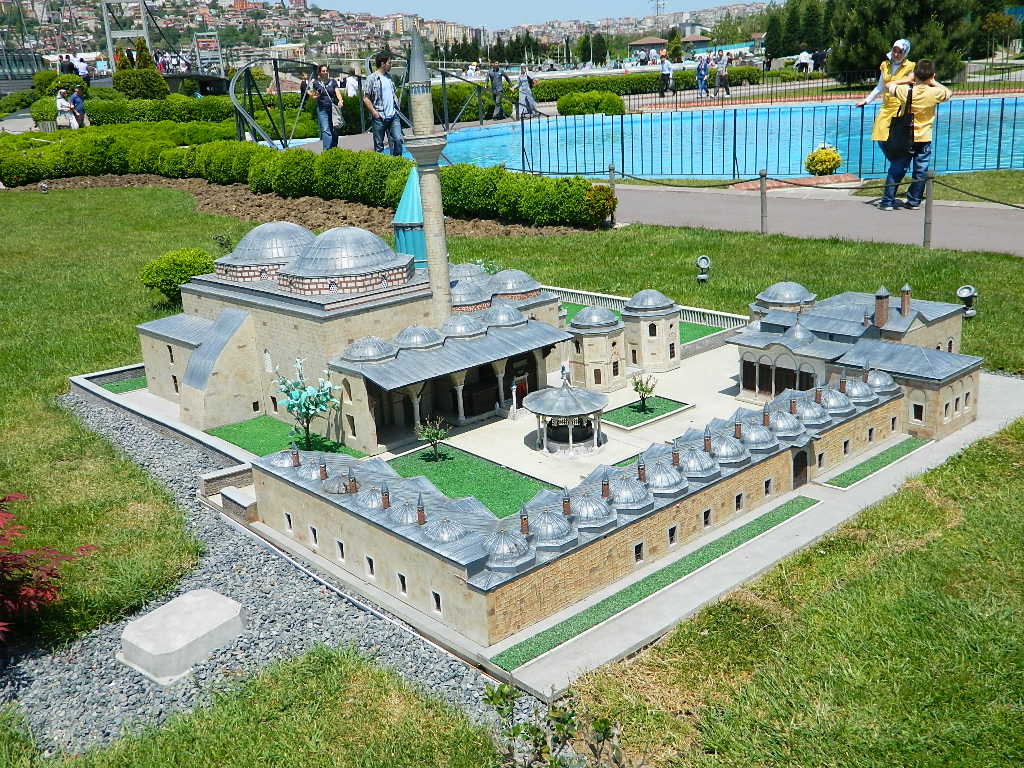
2. Visit Miniaturk and admire how the Greeks, Ottomans, Byzantines & Turks made big things to match all the small ones. Also appreciate the fact that you could have seen the entire country in a few hours. 
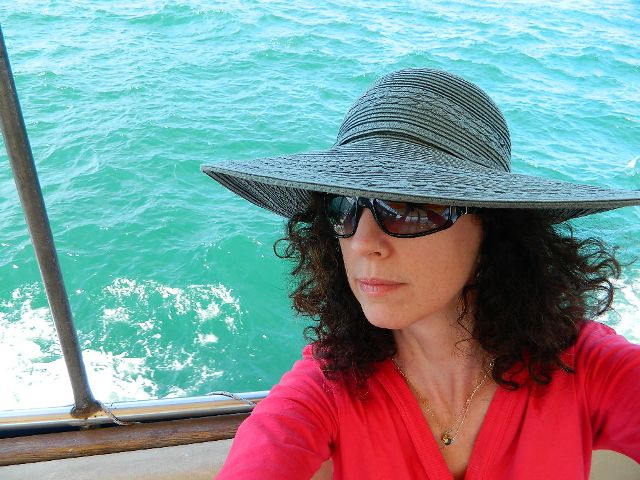
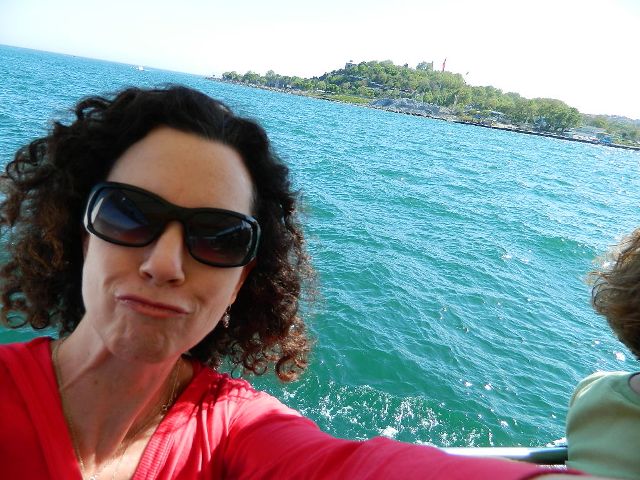
3. Practice the art of the self-portrait on a boat tour of the Bosphorus.

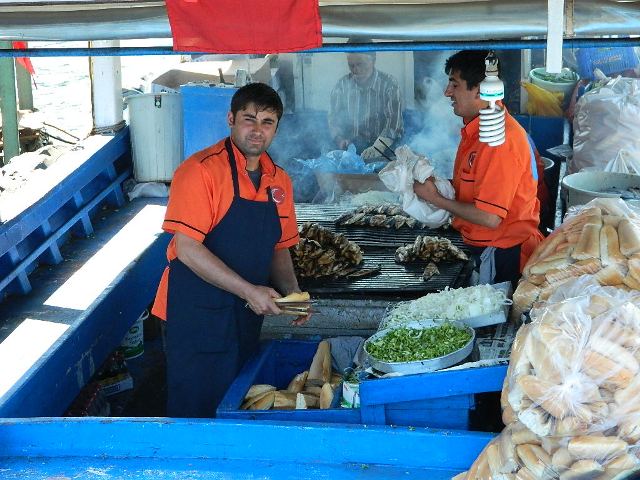
4. Be happy that “fish on bread” isn’t on the lunch menu.
5. Be especially happy that you’re not John Malkovich in a green suit peddling house plants.
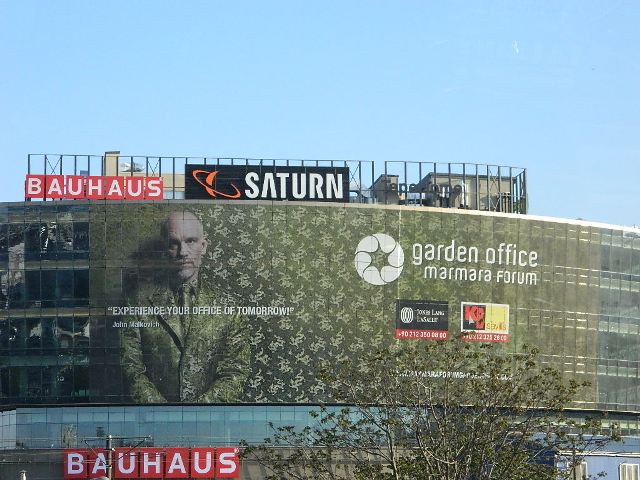
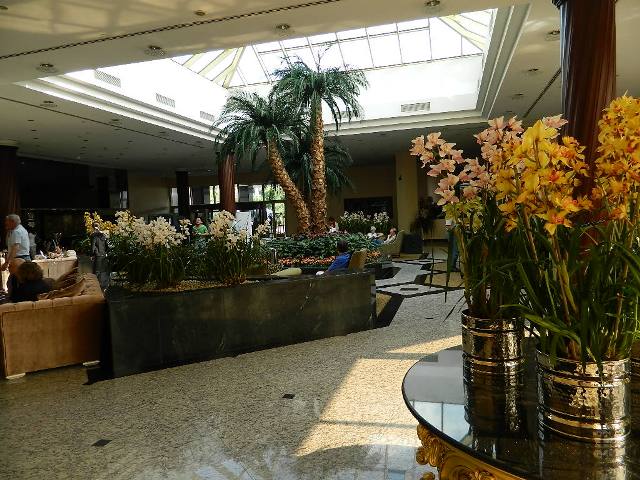
6. Return to the beautiful Grand Cevahir Hotel thankful for your new friends, both Turkish and American, and rember that you are, in fact, the luckiest person in the world, life is short, and credit counseling is free. (The orchids in the photo are all real!)

I can’t believe I bought a Turkish rug.
 […continued] I looked up and there were suddenly 10 more men in the room, assistants who had mysteriously emerged from the rolled up rugs like Children of the Corn. We seemed individually targeteted — you take the short one, I’ll take the weak-looking one in the corner — by a sales team with the stealth and precision of a military unit. Smooth-skinned, soft-spoken and polite, they were a force to be reckoned with.
I had absolutely no intention of buying a rug.
I strengthened my resolve and tried to avoid the guilty feelings of being a free baklava eater by asking the assistant Cunning Mr. Foxypants who had just appeared at my side to tell me more about rug history. In one rapid blur, he retrieved and rolled out several examples of 50-to-100-yr-old rugs in pristine condition, whoosh-whoosh-whoosh, wouldn’t this or this be nice in your house? It soon became clear I was facing a more crafty opponent than I’d surmised. What did I expect, after all, in a region with a 5,000-yr history of merchant trade!? I quickly adopted a three-pronged defense strategy: I’m poor; my house is SO small; my mother gave me two Turkish rugs last year. Somehow, I think the third prong undermined my parents’ strategy as they defended themselves against enjoyed a lively discussion with their own Cunning Mr. Foxypants across the room, but whatever. At this point, it was every man for himself.
I observed with secret admiration these professionals who were capable of conveying in one dark-eyed glance,”So, you think this 100% silk rug with over 2,000 knots per-square-inch that took three women three years to weave, isn’t worth $5,000?”… Prices were reduced, more coffee was offered, guarantees were made. Meanwhile, I devolved into a puddle of babbling and ineffective no’s: my daughter doesn’t really need a dowry, I have bills to pay and college to plan for, plumbing to fix. Perhaps I should have been more direct. Next thing I knew, I was downstairs signing a credit card slip.
I cannot describe exactly how it happened, or why, really (I have every good reason not to buy a rug that costs roughly as much as a new computer or trip to Haiti), except that I’m an artist and have a soft spot for beautifully crafted art and the makers of that art. And a long, bare hallway.
The journey that had begun with the hospitable offer of baklava + Turkish coffee ended here: Every day for the next 200+ years, I or my descendants–Inshallah–will enjoy walking on a tribal-made runner measuring 9′ x 2.5′, woven with a combination of tuft and embroidery techniques by a woman in the Misvani Village. Fifty years ago, this woman invested hundreds of hours of skill and her own life energy in the making of this rug for her daughter’s dowry. The rug was, in the end, not needed for that purpose. The wool used for my runner was shorn from a particular sheep grown only in the Misvani region, hand-spun and dyed with natural pigments. Rugs like mine are becoming more rare because they are so labor-intensive and the women who make them so few. Sorry I don’t have a picture of the rug–it was whooshed up and wrapped for free shipping to the US before I could finish saying ‘Do you take Discover?’[update: now you can see the rug here] I was in good company: four of us left Caravansrais Carpet & Jewellry at 11 pm that night with rugs accompanied by “Guaranty Certificates” and a standing offer to buy back the rugs at any time for 25% more than we’d just paid. That’s how passionate Mr. Kaya is about his work and the work of Turkish women whose rugs he has spent a lifetime buying and selling, just like his father and grandfather before him.
What’s a Turkish rug?
 Fortunately for me, our journalism delagation tour here in Turkey also includes a look at art history & traditions. So naturally, a visit to a rug shop was in order. Our friend and delegation leader, Resul, arranged for us to meet with Tayfun Kaya, owner of Caravanserail Carpets and Jewelry in the city of Kusadasi, and his assistant, Mustafa. Mr. Kaya and Mustafa have been in the carpet business their entire lives, same as their fathers and grandfathers before them, and work seven days a week. After this educational tour, I now understand how my mother returned from Turkey last year with not one, but three gorgeous rugs, and only a vague notion of how it happened.
Our meeting began with Turkish coffee, baklava, and a brief demo & explanation of the long tradition of carpet making in this region. The silk industry purportedly came to Turkey in the 12th century when Byzantine monks smuggled silk worms back from China. These days, Turkey is the second largest silk producer in the world, right after China.
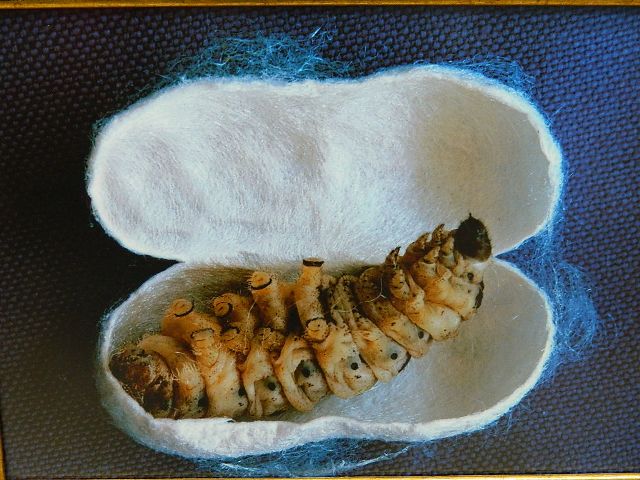
Silk is the second strongest naturally-occurring fiber, with spider web being the first. Each cocoon spun by a silk worm is a single strand, approximately one and a half miles long (!). To harvest the silk, the cocoons are boiled with the worm inside; if the worm were taken out first, the strand would be broken.
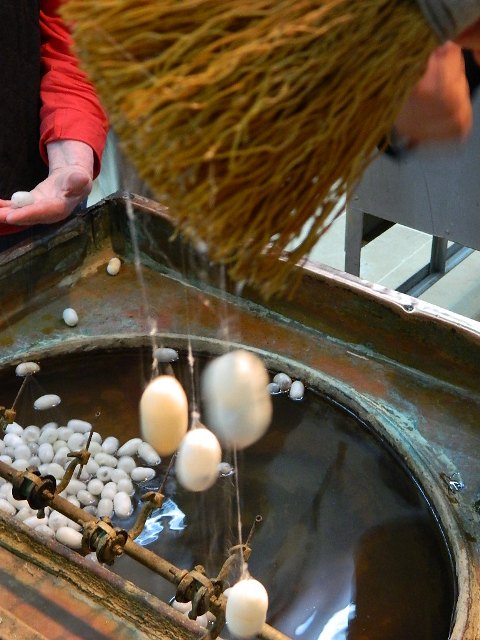
A broom is used to grab the fibers after the cocoons are boiled. Thirty-five fibers are spun together to create one silk strand.
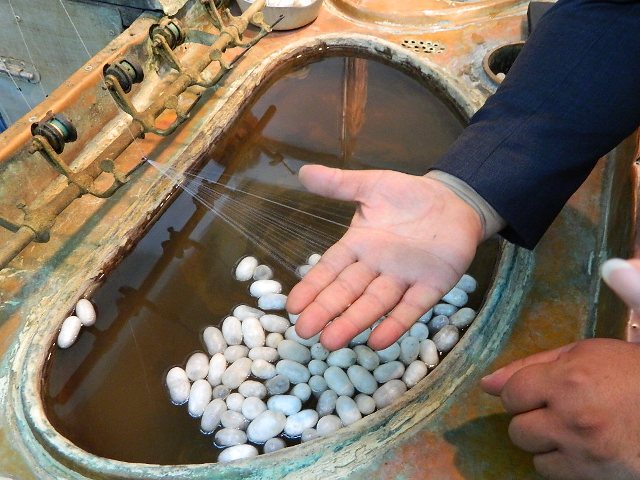
Turkey considers their silk to be superior to China’s because they grow only white worms that eat only mulberry leaves, while the Chinese grow a large proportion of yellow worms that consume the entire mulberry tree (less expensive to grow). Most of the silk worms in Turkey are grown in the Bursa region, not far from Istanbul.
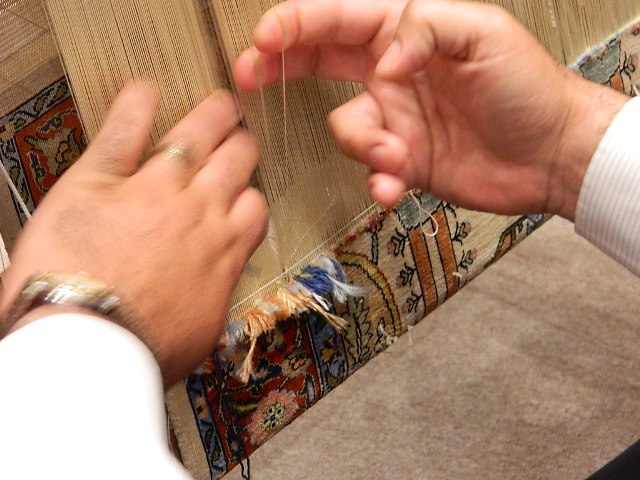
Turkish carpets are composed of various warp/weft combinations: wool/wool; cotton/wool; cotton/silk; or silk/silk. The rugs are hand-woven on looms by women using the double knot technique. Following the pattern, colored threads are looped around two weft strands in sort of a pretzel pattern, and tied tightly. Then the threads are combed down and trimmed.
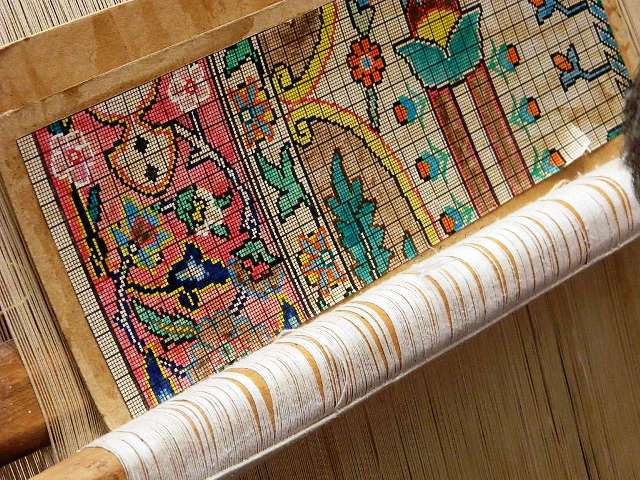
Turkish rugs are priced according to the number of knots per-square-inch only (not size), because obviously, the higher the knot count, the more time and expertise that has been invested. Knots per-square-inch range from 24 (very rough) to over 4,000. The finest designs can be created only in silk, with anywhere from 450-4,000 knots psi. The knots are the main difference between handmade and machine-made rugs, the latter of which uses glue to adhere fibers to the warp. Glued fibers eventually rub off, while knots become stronger with use. The average lifespan of a handmade Turkish rug is 100-200 years or more, depending on the quality.
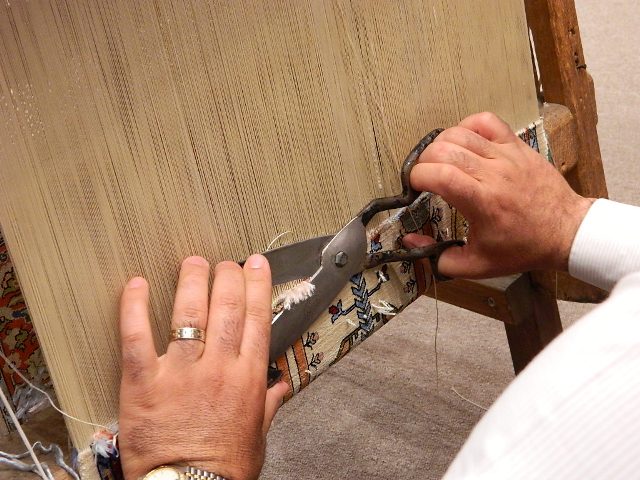
The Guiness World Record holder handmade rug was woven by a renowned carpet making family in Anatolia with a stunning 5,000 knots psi. Tayfun explained that the rug was purchased by a Japanese buyer, but Turkey later regretted the sale and felt it should be kept here as a national treasure. A representative from Turkey flew to Japan and offered the buyer twice what he had paid, but the man refused to sell. There is now a rug under construction by the same family with 5081 knots psi so that Turkey will once again possess the world’s finest handmade rug.
After the demo, which began with, “This is not time to buy rugs, only to learn,” I decided to photograph some of the beautiful examples on the floor. Next thing I knew, [to be continued…]
10 Best Things About Turkey (so far)
UPDATE – check out this post about Istanbul & Capadoccia, which was my very favorite place, along with Ephesus — amazing area of ancient, underground (and rock-carved) dwellings that were used by different peoples through the centuries.
Ok, it’s been five whirlwind days in this beautiful country. internet connection is too sporadic for daily posts; but sitting in the room 1204 of the lovely Aktif Metropolitan Hotel with luxurious wi-fi, I now feel up to the task of a Best-of Top 10 list. Back soon!
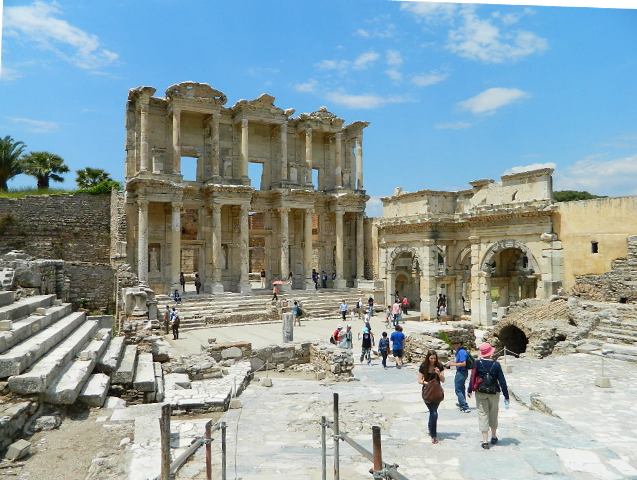
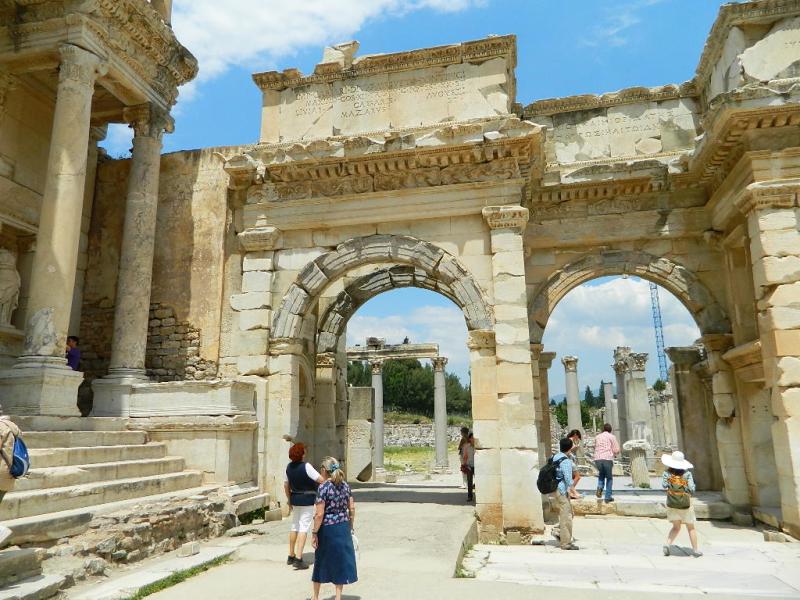
1. Ephesus – (200 BC-400 AD) The partially reconstructed ruins of one of the oldest cities in Anatolia (there were 4 Ephesi ranging from 5th c. BC – present; this is #3), established by Alexander the Great, visited twice by St. Paul. Unlike viewing archaeological remnants in a museum, this site gives you the opportunity to experience the scale, touch, size and geographical presence of a complex ancient city that once had a population of 300,000, heated running water, and great wealth generated by sea merchant trade.
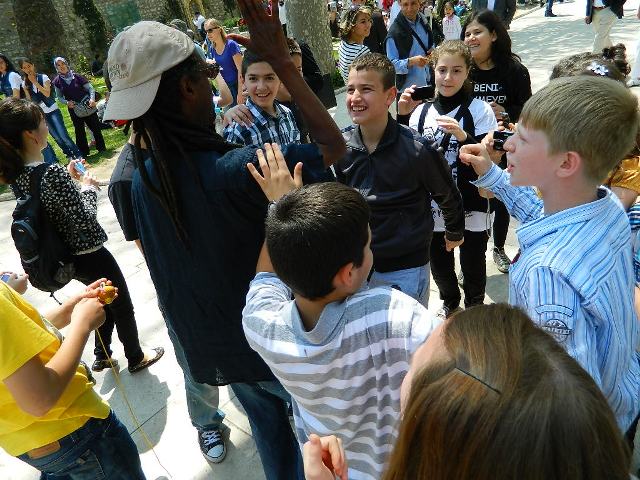
2. Gene’s Rock Star Moment – fellow delegation member, Gene, is a bit of a novelty in Turkey. Here at Topkapi Palace, he was rushed by a gaggle of school boys who thought he was a rock star and/or basketball star. We did nothing to dispel the myth.
3. Bird Island Martini: gin/vodka/home brew (?), salted rim, lemon twist, ice cubes, two kalamata olives. Strange but potent.
4. Turkish Coffee – my new sludgy best friend!
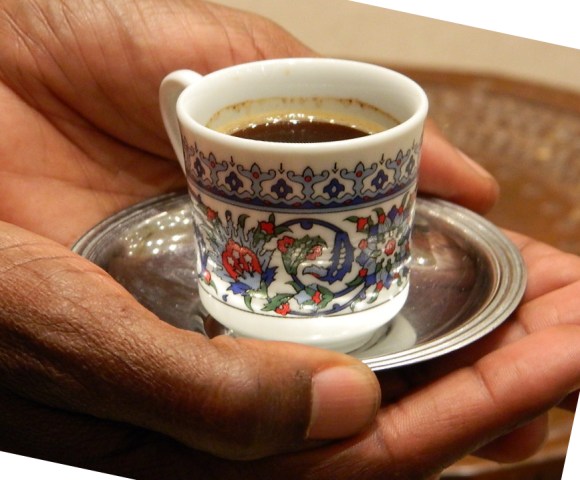
5. But don’t drink Turkish coffee + eat baklava and then expect to resist the carpet salesmen.
6. Turkish Rugs – this needs its own post.
7. Being addressed as exquisite honorable passengers over the PA system on a regional plane.
8. The Food – fresh, whole, and inexpensive. Tomatoes, cucumbers, olives, yogurt & salad with almost every meal (including breakfast). Lentils ,eggplant, cheeses, fresh local meats, eggs also rampant.

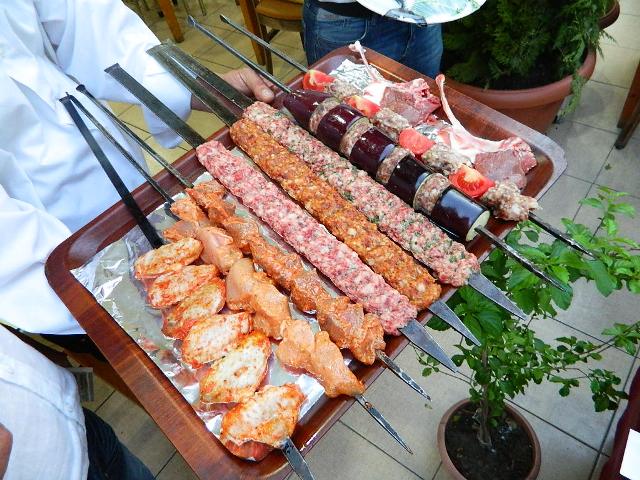
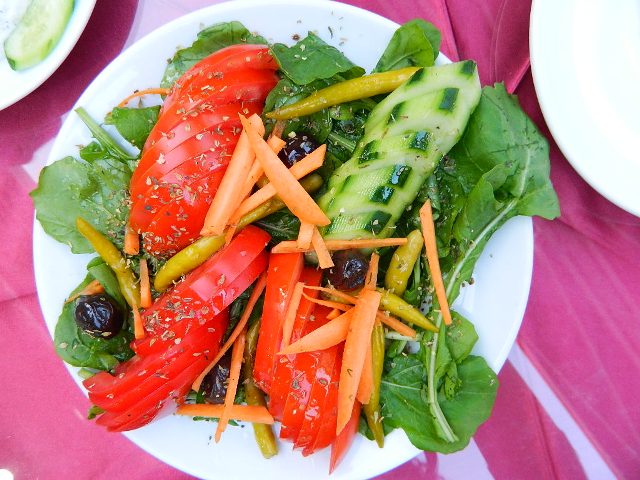
9. Peda – baked in a wood oven, served steaming hot with fresh butter, hard not to eat the whole thing by yourself. SUPER YUM!
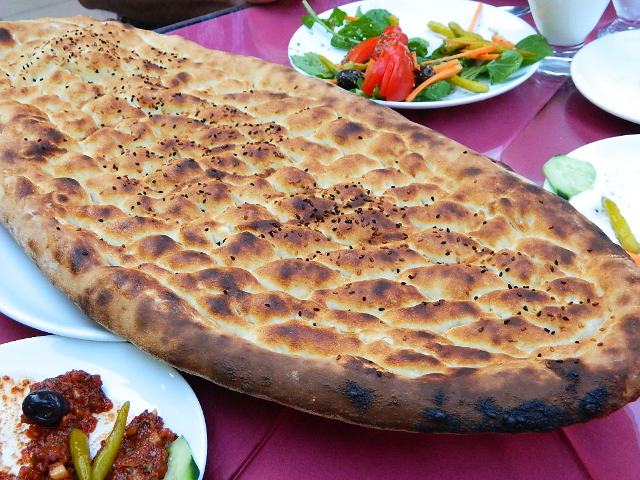
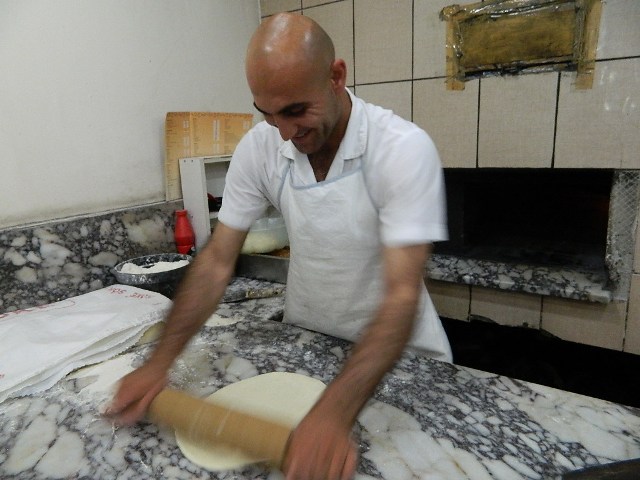
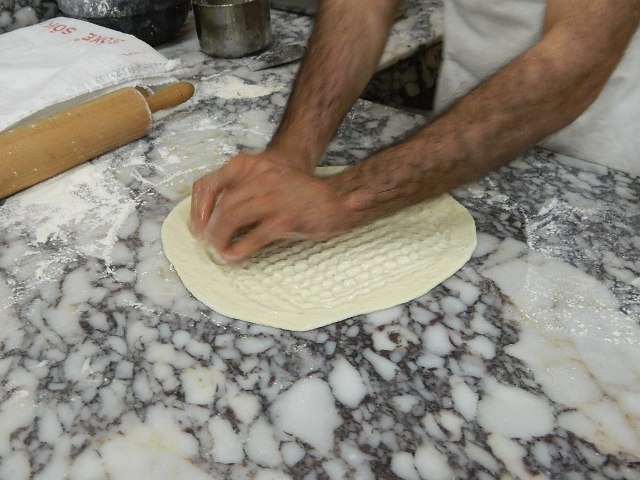
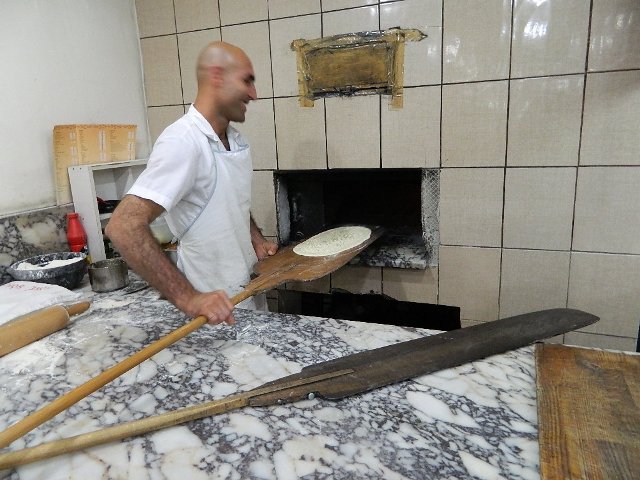
10. The “I have sooooo worked this off already” philosophy of eating whatever you want, and as much as you want, because you’re on vacation and you’ve been walking around a lot.
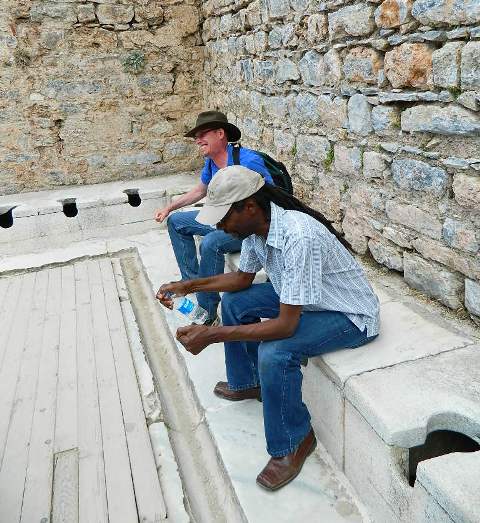
11. Ancient toilets – those Romans really knew their business when it came to doing their business. Complete with a flowing sewer system and carved stone seats, these community crappers gave Romans (men only!) an opportunity to squat in style with their neighbors. Concerned about nether parts touching cold stone? No worries! These beauties were *heated* by the same wood-furnace powered radiant system that also warmed the communal baths. And if you’ve thought it through this far, you may now be wondering about the final, delicate task of ancient wiping… well, see that small canal on the floor? That carried fresh, running water into which the men would dip their wiping sticks [covered with soft cloth] used for post-production cleansing. No double dipping!
Runner-Up: Mike Hess’s Haircut – surprisingly (especially to him) included a beard and eyebrow shave, remnant whisker *burning* with a fiery little broom implement, a neck massage and knuckle cracking (hands).
Turkey: Istanbul (day 2-3)

Greetings from Turkey! I’m in Istanbul right now as a member of a journalism delegation sponsored by the Turquoise Council, a Turkish organization that strives to promote Turkish-American relations through dialogue and understanding. If you’re thinking, “I didn’t know you were a journalist!”, well, you’re right, I’m not. I’m here as more of an accessor- observer type who will document what I can along the way with a few words and pictures so I can at least share a little of this amazing country with my vast readership. Thanks for coming along for the ride.
As you can imagine, the amount of visual, historical, and political info I’vre already been exposed to is overwhelming. Too much to write here, but I’ll share a few thoughts on this second day:
Turkey is a really interesting place. This is the first time I’ve traveled in as Muslim country (the predominant religion, although Turkey is officially secular and all religions are accepted). Unlike many of its neighbors, there is currently no political strife or social unrest. The Parlimentary elections are coming up in a month, and of the 15 different parties that will be represented, the one in power now, JDP (Justice and Development Party) is expected to win for the third time in a row — very unusual. The popularity of this party is attributed to a foreign minister who has fostered much-improved relations with bordering countries; and a very strong economy. ( Turkey has the third fastest growing economy in the world in 2001, right after China and Brazil, and was #2 in 2010.)
Like many of its European neighbors, the history of Turkey is a fascinating look into the nature of empire, power, religion, and social structure. It has been under the control of four different empires since ancient times: the Latins, Romans, Byzantine, and Ottoman. The last of these, the Ottoman Empire, ended in 1923 when the Turkish Republic was created under Ataturk. I’m no history buff, and knew very little about Turkey before coming here, but I’ll share a little of what I’ve learned whenever possible.
These first two days in Istanbul, we’ve seen many of the major sites: Topkapi Palace, Chora Museum, Dolmabace. I won’t go into the spectacularness of these places because the guide books do a great job of that. But a few of my own impressions so far:
- the quality and craftsmanship of the mosaics and decorative arts is beyond stunning, incredible to see in person;
- it feels very safe here, even on crowded streets and at night ( I wonder how much of that is due to the fact that there aren’t bars everywhere?);
- the streets are clean and there is almost no panhandling, etc.;
- I’m in vegetarian heaven, as the food is spectacular — a blend of Mediterranean, Middle Eastern and Eastern European influences. Fresh fruit and vegetables at every meal, and, according to our delegation leader, Resul, “organic” is the norm because there is no such thing as corporate agribusiness in Turkey. You can buy a pound of local, organic tomatoes for .50, compared to $3-$4/lb in Albuquerque, even from the local farms. Gasoline, on the other hand, is currently the equivalent of $10/gallon which has the effect of more people both walking and growing food close to home.
- I learned during a meeting with the Turkish Writers and Journalists Foundation that of a strong movement to promote unity and tolerance among religions and cultures, preferring to see the other as “different” rather than “other.” Read about the Gulen Movement for more on that.
And now, in the interest of not trapping you in ‘someone else’s vacation pictures’ hell, I’ll just post a few of my favorites from these first few days, with brief descriptions:
The Chora Museum, formerly a monastery & church. Was briefly a mosque when the Byzantine Christians abandoned it in 1543 for fear they would be persecuted after the Ottoman’s took Constantinople. Some of the finest examples of frescoes and mosaics anywhere. It’s hard to tell from the photos, but the mosaic pieces are maybe 1/4″ in length (and shorter). Image at the age at the top of the post is a detail from the hands of Mary.


Chora cats have evolved to blend in with the stonework.

Dolmabace, the “new” palace built over 13 yrs during the mid-19th c. to rival European palaces, utilizing European architectural styles. My opinion, the old palace (Topkapi) was much nicer, with its distinctly Eastern architecture and decoration. But imagine the impression visiting dignitaries would’ve had upon stepping off of their yachts, having sailed up the Bosphorus that flows between the Asian and European sides of Istanbul, and seeing this thing.


Taksim Square, one of the most crowded shopping districts in Istanbul (can yu tell?). Unlike the streets of NY or New Orleans or LA, these were very clean and the crowd, although dense, were not angry and pushy.

Many of the Turkish desserts involve semolina, a thin wheat noodle similar to angel hair pasta, but much finer. This dessert was like baklava on the inside and this semolina on the outside, being drizzled with honey (I think).

Hearts & Glowers
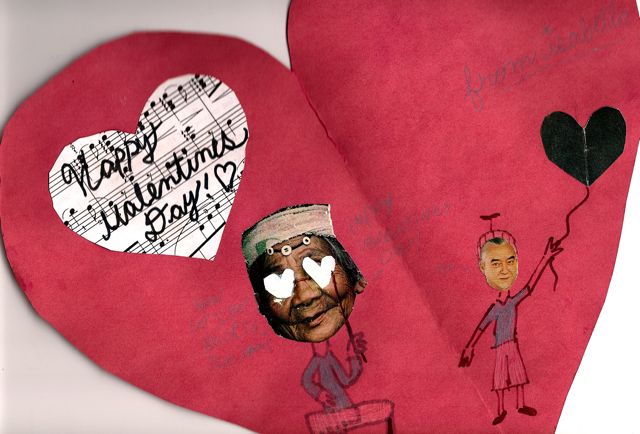
Valentine's card from my daughter, age 8
It’s February 14th again and the day is met with the usual sense of ambivalence and vague suffering that I’ve experienced since approximately the 6th grade, when I was the new kid at St. Mary’s Middle School. I was taller, thinner and paler than almost all of my predominantly Hispanic classmates, an unfortunate confluence of genetics and adolescence that soon earned me the nickname Casper the String Bean. I was not very popular. But people thought I was funny, which ultimately saved me from permanent residence on Planet Tease; such was the doom of Dawn Ratcliffe (aka “Rat-lips”) who was nasty and rarely washed her hair, so you could sort of understand her fate, and Freddy Gonzales, who ended up there for no apparent reason. My heart truly went out to him because the other boys mocked him relentlessly when the teachers weren’t around.
I had a huge crush on several boys, naturally the most unattainable for someone of my social standing. But still, like most 12-yr-old girls, and my daughter now, my Catholic heart was full of hopes and prayers that someday one or all of them would recognize the fantastic Real Me, find me irresistible, and ask me to “go around” or “get together.” I wasn’t sure what having a boyfriend/girlfriend meant at St. Mary’s Middle School, except, perhaps, meeting behind a zoo exhibit or State Fair ride for a kiss during a field trip, or copping a clandestine feel of slight and developing bodies in the dark Catholic school corridors. I didn’t know, but I’d heard the rumors, internalized the mystery, and knew it had something to do with popularity. I wanted it.
Anyway, Valentine’s Day Dance, 1978: I walked into the gym to the sounds of The Commodores, The Eagles, and Elton John in my coolest outfit: blue corduroys, a shirt with little bluebirds printed on it, and a velvety orange vest with gold buttons. I immediately noticed the decorations which consisted of crepe paper, and red paper hearts with the names of all the school couples written in glitter and spread around the gym: Pete + JoPaulla, Vince + Julie, Nina + Greg. This thoughtful gesture on behalf of the Decoration Committee had the dual effect of proclaiming the popularity of those featured on hearts, while reminding everyone else of their desperate, lonely situations, or so it was interpreted by the fragile. And we were all fragile.
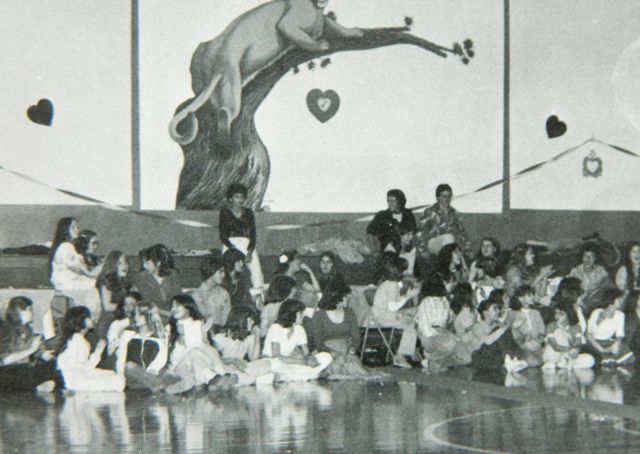
My name was not written in glitter on a paper heart that year, or any year. I did, however, experience my first slow-dance that 1978 Valentine’s Day with Rodney Howard, a diminutive African-American boy who was the best dancer in our class. We had just danced to Brick House [which I would encourage all of you to click and play now… go ahead, I’ll wait… because this post will read much better with a funk soundtrack] when a slow song came on and he held out his hand. Nervous and unprepared, I accepted because I thought I should. Not knowing quite what to do, I clenched one of his arms in my left hand, and gripped his shoulder with my other (I can’t remember where his hands were), and thus began the strained and graceless rocking back-n-forth that was our dance. He seemed unbothered by the fact that I was a good 6″ taller than him, awkward, and held him at a rigid distance while our classmates were draped together so tightly that no light shone between them. Somehow I got through it.
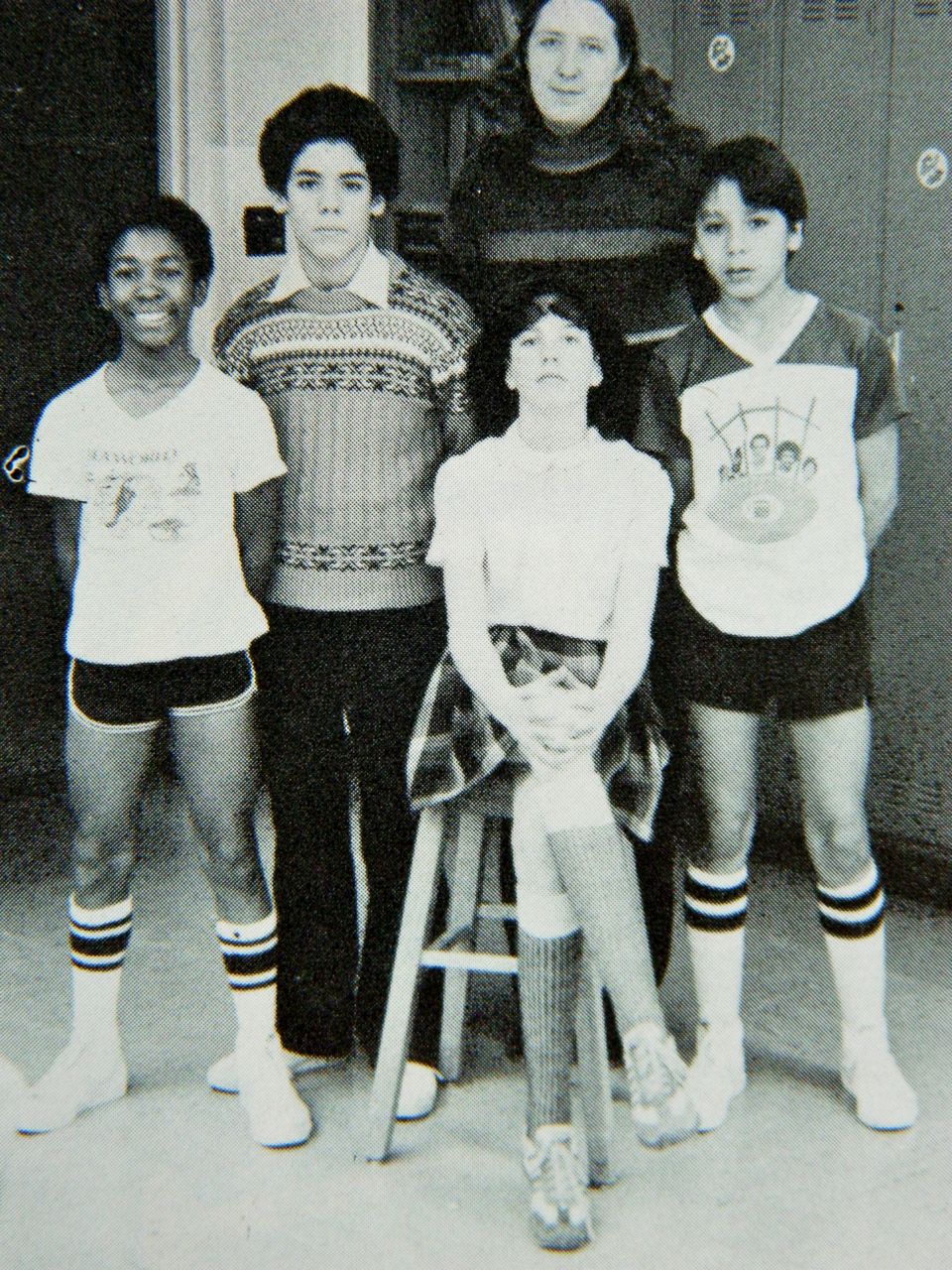
Rodney on the left, me making sure I would never be popular.
I haven’t seen or talked to Rodney Howard since we graduated from St. Mary’s in 1980. But I recently learned through an old classmate that he was convicted of a crime a couple of years ago: possession of child porn with intent to distribute. Hmmm. This information only enhances the delicate and esoteric flavor of my personal Valentine’s Day experiences, pleasures and pains brought to the surface each year by the effervescence of commercial culture and habit. And still, the heart, the organ of love and fire with a mind of its own, persists, and I usually have the courage or foolishness (depending) to follow it. A mixed bag at best. I should write that in glitter.
Click to see my new website for ceramic & biodegradable cremation urns


 Live Clay
